Best Dog Stairs & Steps 2026: 10 Picks for Every Size & Height
By Michael Probert · Updated July 3, 2026 · 10 picks researched
The best dog stairs for your dog depend on three things: how tall the surface is, how heavy your dog is, and how mobile they are. Get all three right and stairs can eliminate daily jump-and-land impacts that accumulate into joint problems over time — especially for small breeds, seniors, and long-backed dogs prone to spinal disc issues.
The American Kennel Club is clear that repeated "explosive" jumping generates high peak forces through hips, elbows, and stifles. PetMD specifically recommends adding dog stairs to furniture as one of the key environmental modifications for dogs with arthritis and age-related joint disease. For Dachshunds, French Bulldogs, and other long-backed breeds, even moderate-height jumps increase risk of intervertebral disc disease (IVDD).
Do Dogs Really Need Stairs?
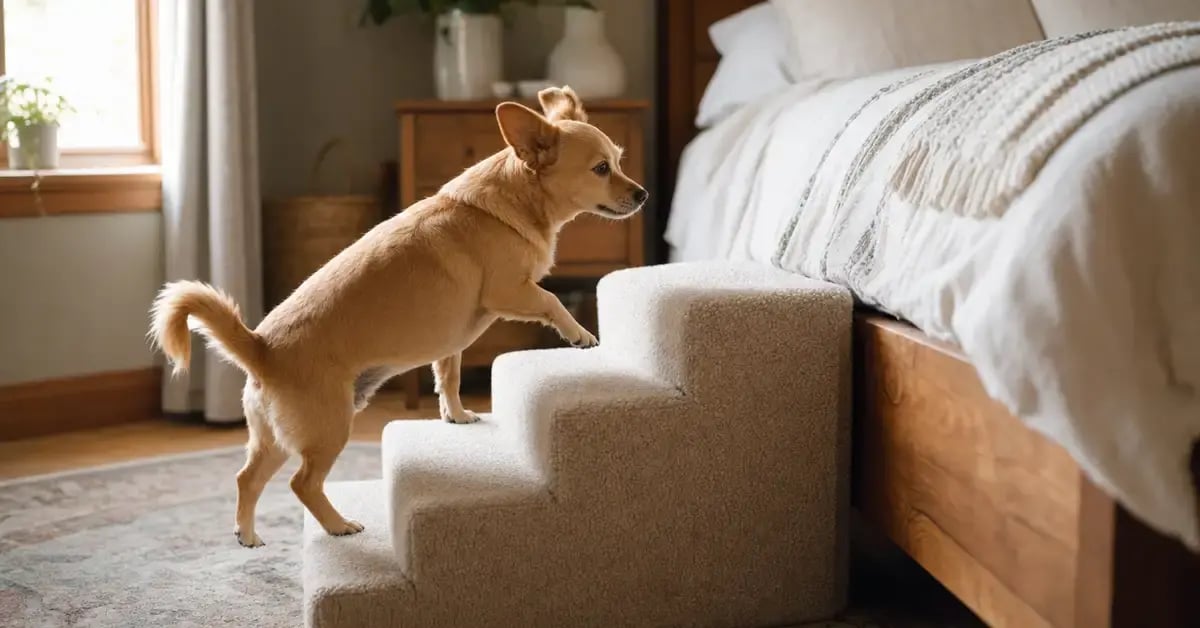
Stairs and steps matter most for three groups of dogs: those who jump frequently, those whose physiology puts them at elevated risk from landing forces, and those already showing signs of joint discomfort.
Toy breeds like Italian Greyhounds and Chihuahuas have delicate bones that fracture more easily from miscalculated jumps. A good Housekeeping vet advisor recommends ramps or small stairs specifically for these breeds rather than letting them free-jump couches. Dachshunds, Basset Hounds, and Corgis carry a genetic predisposition to IVDD — stairs and ramps are a widely recommended preventative measure, not just a convenience. And for senior dogs showing reluctance to jump, stiffness on rising, or slower movement, PetMD lists these as classic early signs of joint pain — and stairs can remove a meaningful daily pain trigger.
Even healthy, energetic dogs benefit from stairs as a long-term investment in joint health, particularly if they share your bed or sofa regularly.
Stairs vs. Ramps: Which Is Right?
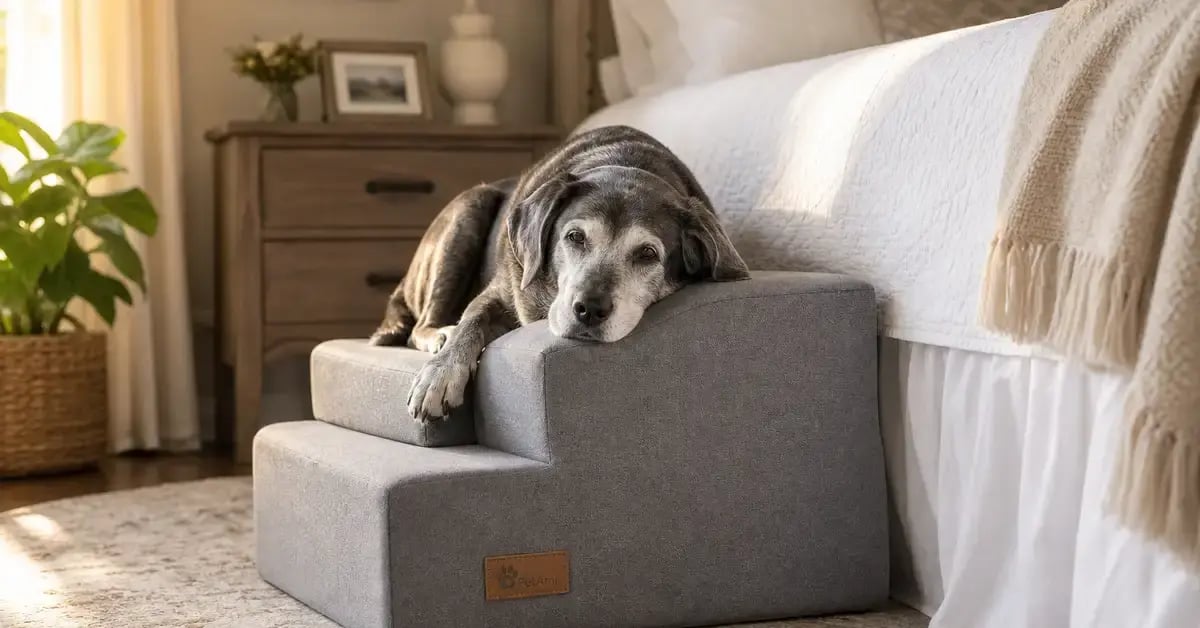
Stairs work best in compact spaces, for moderate heights, and for dogs who are agile enough to manage discrete step risers. They take up less floor space than a ramp at the same height — an important factor in smaller bedrooms. For dogs who are already fairly mobile and confident, steps can actually be easier to learn than a long incline.
Ramps are clinically preferred for dogs with severe arthritis, IVDD, or significant mobility limitations. They allow a more continuous, controlled stride without the repeated joint flexion of stepping up. For vehicle access — especially tall SUVs and trucks — a ramp at 18–27 degrees is gentler than a steep stair arrangement. Many owners keep stairs indoors and a ramp for the car.
If you're weighing up both options, see our guide to the best dog ramps for a full comparison. For dogs who need floor-level orthopaedic support once they reach their destination, pair stairs with a quality bed from our best orthopaedic dog beds guide.
At a Glance: 2026's Best Dog Stairs & Steps
| # | Product | Best For | Weight Limit | Height | Price |
|---|---|---|---|---|---|
| 1 | Pet Gear Easy Step II | Small/medium dogs, beds & couches | 75 lb | 13" | $–$$ |
| 2 | FunnyFuzzy Foldable Stairs | Foldable indoor, small/medium dogs | Check model | Varies | $$ |
| 3 | Laifug 2-in-1 Adjustable Stairs | Senior & arthritic dogs | Check model | Adjustable | $$ |
| 4 | EHEYCIGA Curved Stairs Ramp | Small dogs, couch & chair | Small dogs | ~15.7" | $$ |
| 5 | Topmart Foam Dog Steps | Budget orthopaedic, small dogs | Small/medium | 11.8" | $–$$ |
| 6 | PetSafe CozyUp Folding Stairs | Large dogs, indoor high beds | 150 lb | ~24" | $$ |
| 7 | PetSafe CozyUp Bed Ramp | Large dogs, tall beds | 120 lb | 25" | $$–$$$ |
| 8 | PetSafe Happy Ride Side Door Steps | Car/SUV large dogs | 200 lb | 21–28" | $$–$$$ |
| 9 | Heeyoo Extra Wide Car Stairs | Car/SUV all dogs | Check model | Adjustable | $$ |
| 10 | WeatherTech Pet Ramp | Car ramp, senior/large dogs | Check model | Varies | $$–$$$ |
How We Researched These Picks
- Welfare scaffolding from authoritative sources: AKC guidance on stair/ramp selection, PetMD senior and pain management advice, Good Housekeeping vet expert commentary, and Whole Dog Journal ramp safety criteria.
- Product layer from reputable editorial roundups: The Pet Bench's 2026 expert-tested high-bed stairs review, Road & Track's car ramps & stairs guide, Holistapet's comprehensive dog stairs guide, and DachshundOne's breed-specific ramp criteria.
- Primary-source verification: Manufacturer specs cross-checked for weight capacities, step geometry, and material claims (PetSafe, Pet Gear, WeatherTech).
- No hands-on testing: Honest Hound is research-led. We read and synthesise what expert reviewers and vets have found — we don't fabricate test results.
- Safety-first framing: Weight capacity, non-slip surfaces, step geometry, and structural stability are our primary evaluation criteria — not price or aesthetics.
The Best Dog Stairs & Steps 2026
Pet Gear Easy Step II Pet Stairs
The Pet Gear Easy Step II earns the top spot for small and medium dogs because it nails the basics: non-slip carpet treads on every step, rubber grippers on the base to prevent sliding on hardwood floors, and a snap-together frame that doesn't wobble under active dogs. The two-step design reaches 13 inches — suitable for standard-height couches and lower beds.
Step geometry is well thought out: a 5-inch rise per rung, first-step depth of 8.5 inches, second-step depth of 9.5 inches. The AKC specifically highlights slip-resistant surfaces and adequate tread depth as the two most important features for dog stairs — this model delivers both. The innovative incline built into each step effectively reduces the steepness of each rung, which is gentler on joints than a purely vertical rise. Carpet treads are removable and machine washable — useful for any dog prone to muddy paws or the occasional accident.
Weight capacity caps at 75 lb, which covers most small and medium breeds comfortably. For larger dogs, move to pick 6 (PetSafe CozyUp Folding Stairs). The plastic aesthetic is purely functional, so if it lives permanently beside your bed it won't win style points — but it will get used reliably every day, which is the point.
✓ Pros
- Non-slip carpet treads + rubber base grippers
- Well-designed step geometry (5" rise, generous depth)
- Removable, machine-washable treads
- Stable snap-together frame, no wobble
- Compact footprint for bedrooms
✗ Cons
- 75 lb weight limit rules out larger breeds
- Only 13" tall — won't reach high beds
- Functional plastic aesthetic
FunnyFuzzy Foldable Non-Slip Dog Stairs
FunnyFuzzy's foldable stairs are a good option when you need to move stairs between rooms or store them away — at a sofa during the day, then beside the bed at night, or packed for trips. The fabric-forward design blends with furniture better than bare plastic, and the non-slip pads on the base grip floors reliably. Some models include side rails or guards, which help prevent lateral falls from higher positions.
FunnyFuzzy is candid in its product guidance about who these stairs suit: small and agile dogs who can manage discrete step risers. The brand itself recommends that Dachshunds, Basset Hounds, Great Danes, and similar long-backed or large breeds limit steep stairs and use wider ramps instead — that kind of honest breed-specific guidance is a good sign in a pet brand. If your dog fits the target profile (smaller, confident, mobile), these stairs serve their purpose well. Train your dog to use them with short, treat-based sessions rather than guiding them by force.
✓ Pros
- Folds flat for storage or travel
- Fabric aesthetic integrates with furniture
- Non-slip base pads on most models
- Some models include side guards
✗ Cons
- Not recommended for Dachshunds, large breeds
- Weight capacity varies by model — check before buying
- Folding mechanism needs checking for rigidity when deployed
Laifug 2-in-1 Adjustable Pet Stairs
The Laifug 2-in-1 is the closest thing to a stair-ramp hybrid in this list — and that's exactly why it works well for older dogs or those recovering from joint surgery. The 35D high-density foam construction means the structure is firm enough to support without bottoming out, but soft enough that a missed step doesn't mean a hard collision. Laifug positions this as "orthopaedic joint support," and while that's marketing language, the foam density and low-angle geometry genuinely align with what rehab vets recommend for reducing joint angles during stair use.
The 2-in-1 adjustable element means owners can reconfigure the steps into a shallower ramp-style angle for dogs who are particularly stiff, or use the stair configuration for dogs with more mobility. Removable, washable covers keep the surface clean and maintain traction. The soft surfaces eliminate hard edges — a meaningful practical benefit if an older dog stumbles mid-step.
Note that this product, like most foam stairs, has weight limits suited to small and medium dogs. Verify specs for your specific model. If your dog shows signs of pain — reluctance to move, stiffness on rising, or refusing to jump — have a vet assess before introducing any new equipment, as underlying conditions may need treatment first.
✓ Pros
- 35D high-density foam — firm support without hard edges
- Adjustable stair/ramp configuration
- Low risers reduce joint angles
- Removable washable covers
- Non-slip base
✗ Cons
- Foam weight limits suit small/medium dogs only
- Bulkier than compact plastic stairs
- Some dogs may chew foam edges
🛏️ Also helping your dog rest better? See our picks for the best orthopaedic dog beds — matched by size, weight, and joint-support needs.
EHEYCIGA Curved Dog Stairs Ramp
The EHEYCIGA curved stairs ramp takes a slightly different approach by using a gentle curve across its three steps to reduce the visual steepness and encourage a more controlled, walking movement rather than bounding. At around 15.7 inches, it's well matched to standard sofas and chairs rather than tall beds. For small dogs — particularly nervous ones who take time to adjust to new gear — the fabric-covered foam surface and curved geometry can make initial acceptance easier than a straight plastic staircase.
The design is compact enough for living rooms without dominating the space. Non-slip feet keep the unit from shifting on hard floors. TailtasticPicks' multi-pet review notes foam and carpeted steps are easier on paws than bare plastic — this model delivers that quality at a mid-range price point. Best suited to small dogs accessing sofas and chairs rather than tall beds.
✓ Pros
- Curved geometry encourages controlled movement
- Soft fabric surface — gentler than bare plastic
- Compact for living rooms
- Non-slip feet
✗ Cons
- 15.7" height limits use to sofas/chairs, not tall beds
- Designed for small dogs only
- Limited suitability for heavier dogs
Topmart High Density Foam Dog Steps
The Topmart foam steps are a budget-accessible entry into orthopaedic stair design, at 11.8 inches tall across two tiers. At this height they work best for lower couches and chairs — not high beds. But for a small or medium dog who just needs a gentle boost rather than a tall climb, these deliver the core features: high-density foam that cushions mis-steps, a non-slip base, and a removable, washable fabric cover.
PetProductAuthority positions these as "best for injured, older dogs," which is honest-ish marketing aligned with general foam stair principles rather than a formal vet endorsement. Take that framing at face value — they're soft, safe, and accessible, not a medical device. For dogs recovering from minor procedures or small seniors who struggle with a single jump, they're a practical, affordable option.
✓ Pros
- High-density foam cushions joints
- Non-slip base
- Removable washable cover
- Budget-accessible price
✗ Cons
- 11.8" only reaches low furniture
- Not suited to larger dogs
- Limited to small/medium dog weight ranges
PetSafe CozyUp Folding Pet Stairs
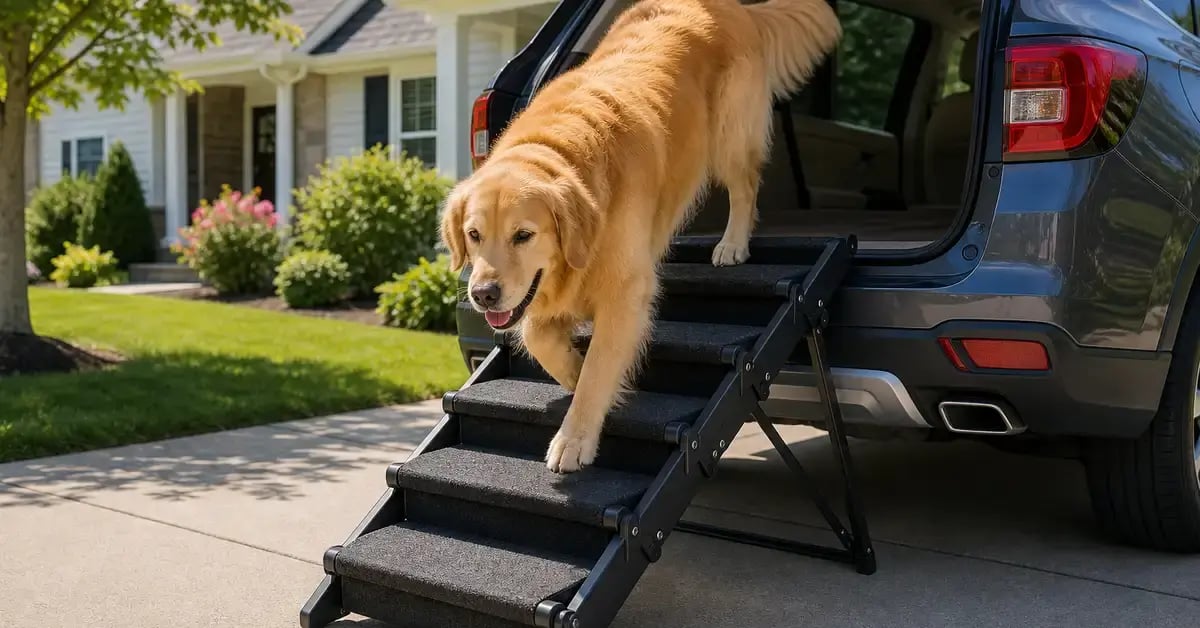
PetSafe's CozyUp Folding Stairs address a real gap in the market: high-weight-capacity indoor stairs that can still be moved between rooms when needed. Rated to 150 lb with independently tested construction, these stairs handle most large breeds without the wobbling or flexing that makes lower-rated designs dangerous. The ~24-inch height reaches most beds, including higher mattress-on-frame setups.
Holistapet's stairs guide makes the point bluntly: large dogs require stairs that can handle 100 lb or more without wobbling, tipping, or folding under load. The PetSafe CozyUp clears that bar by a significant margin. Wide steps with high-traction surfaces prevent paw slippage even for enthusiastic climbers. The folding mechanism locks rigidly when deployed — TailtasticPicks' multi-pet review notes grippers and structural reinforcements keep them steady under heavy dogs in typical conditions.
The trade-off is a more utilitarian look compared with fabric-covered foam stairs. But for a 90-lb Labrador accessing a tall bed twice a day, structural reliability matters more than aesthetics.
✓ Pros
- 150 lb capacity — suitable for most large breeds
- ~24" height reaches tall beds
- Folds for storage or relocation
- Wide, high-traction steps
- Independently tested construction
✗ Cons
- Functional appearance — not furniture-grade aesthetic
- Heavier than foam stairs
- Check folding locking mechanism before first use
PetSafe CozyUp Bed Ramp
If your dog has pronounced arthritis, a long back (Dachshund, Basset Hound), or is recovering from surgery, the PetSafe CozyUp Bed Ramp often makes more clinical sense than stairs. A continuous incline distributes load more evenly through the gait and avoids the repeated sharp joint angles of stepping up discrete risers. The CozyUp reaches 25 inches — sufficient for most bed heights — and is independently tested to 120 lb.
Good Housekeeping's vet expert recommends ramps with carpeting for traction specifically for dogs with neck or back injuries, to reduce jump risk on and off couches and beds. The CozyUp's high-traction walking surface delivers that. The wooden construction blends into bedrooms more naturally than plastic stairs, which matters when the ramp lives beside your bed permanently. PetMD's senior dog care guidance pairs environmental modifications like ramps directly with orthopaedic bedding as the two core strategies for reducing daily joint strain — if you're building that setup, this ramp and a quality orthopaedic bed are the right combination.
Note that ramps require more floor space than stairs. Measure from bed base to where the ramp foot will land — you need clear space, especially in tighter bedrooms. For dogs who won't use a ramp, the folding stairs (pick 6) remain a solid fallback.
✓ Pros
- Continuous incline — gentler on arthritic joints than steps
- 120 lb capacity, independently tested
- 25" height reaches most beds
- High-traction walking surface
- Integrates aesthetically with bedroom furniture
✗ Cons
- Larger floor footprint than stairs
- Some dogs resist ramps — requires training
- Higher price point than comparable stairs
PetSafe Happy Ride Side Door Pet Steps
The PetSafe Happy Ride Side Door Steps are purpose-built for car access — not repurposed indoor stairs — which shows in the design. Three height settings (21.25", 24.75", and 28") let owners dial in the right match for their vehicle's door height, so the top step aligns with the car floor rather than leaving a gap your dog has to jump. Road & Track's car access gear guide makes the point plainly: how a ramp or stairs interfaces with your specific vehicle matters more than almost anything else.
The 200 lb weight capacity is the headline spec here — this is one of the few dog stairs rated to handle very large and giant breeds. Textured treads provide grip even in damp outdoor conditions, and the frame is engineered to hook or brace securely at the car door. If you have a large breed that used to jump into the back seat or boot with ease but is now showing stiffness or reluctance, these steps can restore that independence at a fraction of the effort of lifting a heavy dog in and out.
Clinical note: for dogs with serious hip dysplasia or severe mobility impairment, a ramp may still be gentler — ask your vet what's appropriate before introducing car stairs.
✓ Pros
- 200 lb capacity — suits giant breeds
- Three height settings fit most vehicles
- Designed specifically for car side-door access
- Textured non-slip treads
✗ Cons
- Steeper than a long ramp — not ideal for severe joint disease
- Sized for vehicle use, not indoor furniture
- Higher price point
Heeyoo Extra Wide Foldable Car Dog Stairs
For owners who want car stairs rather than a ramp — particularly for outdoor adventures with SUVs and trucks — Heeyoo's Extra Wide Foldable Car Stairs fill the role. Road & Track's dog access guide highlighted these specifically for their extra-wide treads, which prevent slipping and give large dogs room to place their paws securely without cramped footing. They fold flat for storage in the boot and are sturdy enough for the dynamic loads of large dogs entering and exiting vehicles.
Holistapet's commentary on these stairs highlights their strong support for large dogs getting into a car — the wide steps being a particular plus for big breeds who would feel cramped on narrow vehicle stairs. Training guidance from Road & Track mirrors AKC's approach: start by placing the stairs flat, lead the dog across with treats at low height, then gradually introduce the incline once confidence is established.
Verify the weight capacity directly for your specific model — manufacturer specs for car stairs vary and "large dog" in marketing copy doesn't always mean the 80–100 lb range you might expect.
✓ Pros
- Extra-wide treads for large dogs
- Folds for easy car storage
- Non-slip surfaces on treads
- Editorial endorsement from Road & Track
✗ Cons
- Verify weight capacity before purchasing
- For vehicles — not indoor furniture use
- Potential steepness for mobility-impaired dogs
WeatherTech Pet Ramp
The WeatherTech Pet Ramp rounds out the vehicle access category. While technically a ramp rather than stairs, it competes in the same buying decision for dogs needing car access — and for senior or mobility-compromised dogs, it's the better clinical choice. Whole Dog Journal's ramp criteria recommend a 18–27 degree incline range for canine ramps, noting that longer ramps allow gentler angles. WeatherTech's foldable design achieves this while keeping the ramp portable enough to stow in the boot.
The high-traction surface addresses the most common point of failure with vehicle ramps — a dog who slips once may refuse to use the ramp at all. WeatherTech's automotive engineering background means the surface treatment is purpose-built for outdoor use, including damp grass and gravel, not just indoor carpet. For owners of senior Labradors, arthritic Goldens, or any large breed that now hesitates before attempting to jump into the car, this ramp is worth the investment.
✓ Pros
- High-traction surface designed for outdoor conditions
- Folds for easy storage
- Gentle incline better suited to arthritis than stairs
- Compatible with wide range of vehicles
✗ Cons
- Requires space behind vehicle to deploy
- Some dogs need training to accept ramps
- Check weight capacity for your specific model
Key Safety Rules When Choosing Dog Stairs
Weight capacity is the most commonly underestimated factor. Choose stairs rated well above your dog's current weight — at least 20% above is a reasonable safety margin to account for dynamic loads, movement, and any future weight change. Stairs that flex significantly under load scare dogs and fatigue materials over time, increasing the risk of failure.
Step geometry matters as much as height. Look for rises of around 5–6 inches per rung for dogs accessing beds 24–40 inches high — these give dogs enough lift per step without demanding a launch. Tread depth should be generous enough for your dog to place their full paw, not just tiptoe. Width should exceed your dog's shoulder width by several inches, with a preference for side rails if accessing high surfaces.
Non-slip surfaces on both treads and the base are non-negotiable. A stair unit that slides on hardwood when a dog climbs it quickly defeats the purpose. Carpet or rubber treads, and rubber grippers on the base, are the standards to look for. Always measure your specific furniture height rather than estimating — mismatched stairs that fall short of the bed surface mean your dog makes a final jump onto the surface, reintroducing the joint impact you're trying to eliminate.
Training Your Dog to Use Stairs
The AKC recommends starting with short practice sessions and barriers on at least one side to guide the dog. Never push or pull a hesitant dog onto stairs — this creates fear that can persist even after any physical concern is resolved. Use treats or a favourite toy to lure them up one step at a time, reward each step, and end the session before frustration sets in.
For dogs who are very nervous, place the stairs on the floor with no adjacent furniture at first. Let them sniff and explore the new object with no pressure, then begin luring onto the first step only. Gradually build to the full climb over several days. Dogster's ramp training guide applies equally to stairs: patience and incremental progress are the entire strategy.
For reactive or anxious dogs, keep early training sessions quiet, away from distractions, and stop immediately if your dog stops taking treats — a reliable sign they're over-threshold. See our guide to crate training for more on how to introduce new equipment positively.
Frequently Asked Questions
What size dog stairs do I need?
Measure the height of your target surface — bed, couch, or car floor — from the ground. Choose stairs whose total height matches or slightly exceeds that measurement so your dog steps onto the surface rather than jumping the last few inches. Step depth and width matter too: your dog should be able to place their full paw on each tread without crowding. Stairs with ~6-inch risers and 8–10-inch treads work well for most dogs accessing beds 24–40 inches high.
Are dog stairs safe for dogs with arthritis?
Stairs can help arthritic dogs by eliminating high-impact jumping, but design matters. Low-rise steps (4–6 inches per rung), non-slip surfaces, and high-density foam construction reduce joint stress. For dogs with severe arthritis or spinal disease like IVDD, a low-angle ramp is often gentler than discrete steps — ask your vet what's right for your dog's condition. Always introduce new equipment slowly with positive reinforcement.
How do I train my dog to use stairs?
Start by letting your dog sniff and explore the stairs at floor level with no pressure. Use small treats to lure them onto the first step, reward immediately, then end the session. Over several sessions, gradually encourage them to take additional steps. Never push or pull your dog — this creates fear and sets training back. Short, positive sessions of 3–5 minutes work best, especially for nervous or older dogs.
What is the difference between dog stairs and a dog ramp?
Dog stairs use discrete step risers and take up less floor space — good for compact rooms and confident dogs reaching moderate heights. Dog ramps use a continuous incline, distributing load more evenly through the gait and reducing sharp joint angles at each step. Ramps are often preferred for dogs with IVDD, hip dysplasia, or very limited mobility, and for tall vehicle entries where a ramp can stay under 27 degrees. Many owners use stairs indoors and a ramp for the car.
Can large dogs use dog stairs safely?
Yes, but weight capacity and structural integrity are critical. Choose stairs rated well above your dog's actual weight — a safety margin of at least 20% is recommended. Look for wide, reinforced frames and non-slip bases to prevent tipping. The PetSafe CozyUp Folding Stairs (150 lb) and Happy Ride Side Door Steps (200 lb) are purpose-built for large breeds. Avoid flimsy plastic stairs that flex or wobble under heavier dogs.
Should I use dog stairs or a ramp for my car?
For most dogs, a ramp works better for cars and SUVs because it keeps the incline gentle even from tall entries. Stairs are a good alternative for confident dogs and side-door access where a long ramp would be impractical to deploy. Always check that the stairs interface properly with your vehicle's door height, and confirm the weight rating exceeds your dog's actual weight. For dogs recovering from surgery or with serious joint disease, a low-angle ramp is usually the safer choice.
Complete Your Dog's Mobility Setup
Pair stairs with the right ramp for car trips, and an orthopaedic bed that's easy to step onto once they arrive.
Sources: American Kennel Club — Dog Stairs and Ramps (2023) · PetMD — Senior Dog Health Issues (2024) · PetMD — How to Tell If a Dog Is in Pain (2023) · Dogster — How to Train Your Dog to Use a Ramp (2024) · Good Housekeeping — Should Dogs Sit on the Couch? (2025) · Road & Track — Best Dog Ramps for Cars (2024) · The Pet Bench — Top 7 Dog Stairs for High Beds (2026) · Holistapet — 12 Best Dog Stairs for All Breeds (2026) · Whole Dog Journal — Best Dog Ramps · DachshundOne — Best Ramps for Dachshunds (2025) · Yugo Pets — Dog Won't Do Stairs or Jump (2026)
This guide provides general information, not veterinary advice. Consult your vet before changing your dog's exercise or mobility routine, especially if your dog shows signs of pain or has a diagnosed joint condition.