How to Crate Train a Puppy (Step by Step)
By Michael Probert · Updated June 2026
If you are worried the crate feels like a cage, you are exactly the kind of owner who tends to do it beautifully. Done gently, crate training gives your puppy a safe little bedroom of their own — and this is the calm, step-by-step way to get there.
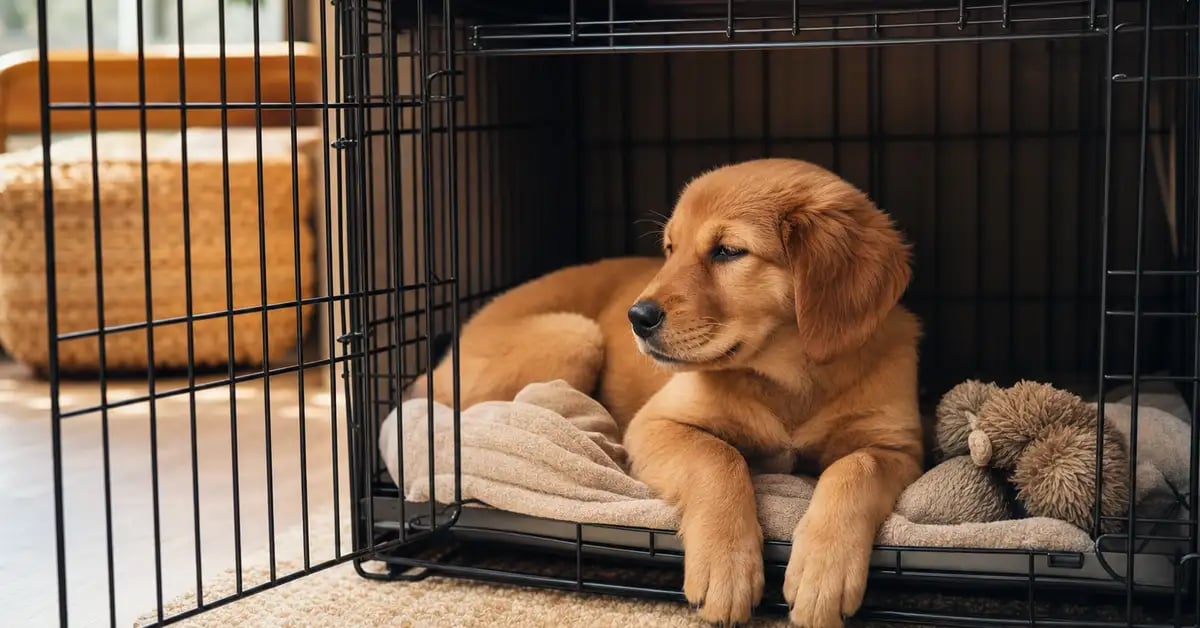
To crate train a puppy, introduce the crate gradually and only ever positively: door open with treats, then meals inside, then short closed-door sessions with rewards, slowly building duration before you leave the room and the house. Never use the crate as punishment, keep it correctly sized, and respect age-based time limits.
Let us start with the worry, because almost every kind owner has it: is it mean to put my puppy in a crate? Here is the reassuring, evidence-based answer — used the right way, a crate is not a cage and not a punishment. It is a cozy, predictable den your puppy comes to choose for themselves. At Honest Hound, we think of crate training as a slow, friendly conversation rather than a battle of wills: every step is the puppy's choice, paired with good things, and rushed for no one. Get the pace right and most puppies settle far more easily than you would expect.
Why does crate training work — and is it really kind?
Crate training works because, with patient and positive practice, a correctly sized crate becomes a safe resting place your puppy actively chooses — making house training easier, keeping them safe when you cannot watch them, and helping them cope calmly with travel and vet visits. It is kind when it is gradual and never punishment; it is only unkind when it is rushed or overused.
You may have heard that "dogs are den animals" who instinctively love small spaces. The truth is gentler and more honest than that. Modern guidance frames the crate as a comfortable, secure resting place rather than a cage — the American Veterinary Medical Association describes appropriate housing for dogs as somewhere that gives a secure, comfortable place to rest. Dogs do not arrive pre-programmed to adore crates, but through simple, repeated good experiences — food, chews, naps — most learn to treat a well-sized crate as their own snug bedroom. The crate does not work by magic or instinct; it works because you make it lovely.
The practical payoffs are real. The American Kennel Club points out that puppies naturally try not to soil where they sleep, so a snug crate gently encourages bladder control and speeds up house training. A crate also keeps a curious puppy away from electrical cords, swallowable objects and household chemicals when you cannot supervise, and — because many airlines, vet hospitals and emergency shelters use crates — a puppy who already finds them safe copes far better with those stressful moments later in life.
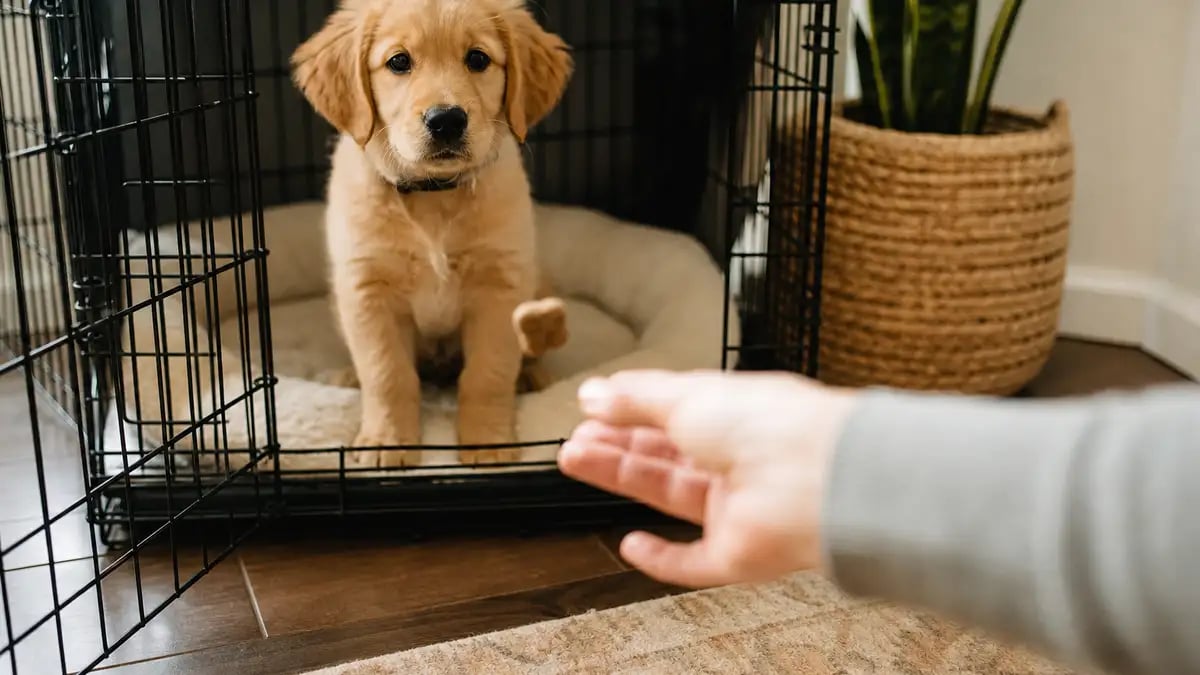
There is one rule that every reputable source agrees on without exception: the crate must never, ever be used as punishment. The AKC stresses that sending a puppy to the crate while scolding them, or slamming the door in frustration, quickly destroys the safe feeling you have worked to build and can make them fear both the crate and you. The crate is a bedroom, not a time-out jail. If you need a moment to defuse over-excited play, walk your puppy there calmly, hand them a chew, and keep your voice warm — so the crate always stays emotionally safe.
What crate and what size do you need?
Choose a crate just big enough for your puppy to stand up fully, turn around, and lie down on their side comfortably — no bigger, or they may sleep in one corner and toilet in another. Because puppies grow quickly, most guidance recommends buying the expected adult size and using a divider panel to shrink the space while they are small, then opening it up as they grow.
That stand-turn-lie-down rule is the heart of it, and the AKC, humane societies and trainers all converge on it. Too small is uncomfortable and unfair; too large quietly sabotages house training, because a puppy with spare room will happily designate a "bathroom corner." A movable divider solves the growth problem neatly — the Adopt a Pet guidance and others note that buying one adult-size crate with a divider is more economical, and kinder on the planet, than replacing crates as your puppy grows.
On crate type, you have three main choices. Wire crates are the usual home pick: sturdy, well ventilated, collapsible, and easy to fit with a divider — draping a breathable blanket over part of it can add a snug, sheltered feel for a puppy who seems over-exposed. Plastic "airline" crates feel cozier and more enclosed and are required by many airlines, though they can run warm and are harder to reconfigure. Soft-sided fabric crates are light and handy for already-trained adult dogs, but they are a poor first crate for a puppy — most pups treat the fabric as a chew toy and can tear or unzip their way out.
Placement matters more than people expect. Your puppy is a social little creature, so the crate should sit where the family spends time, not be banished to a distant basement or laundry room. Keep it out of direct sun, away from radiators or heating vents, and out of drafty corridors. Many trainers suggest two resting spots in the early weeks — one in the main living area for daytime naps and one in or beside the bedroom for nights. When you are ready to pick the actual crate, our honest guide to the dog gear you actually need walks through the essentials, and our best dog crates guide ranks the top options by type and size.
How to crate train a puppy, step by step
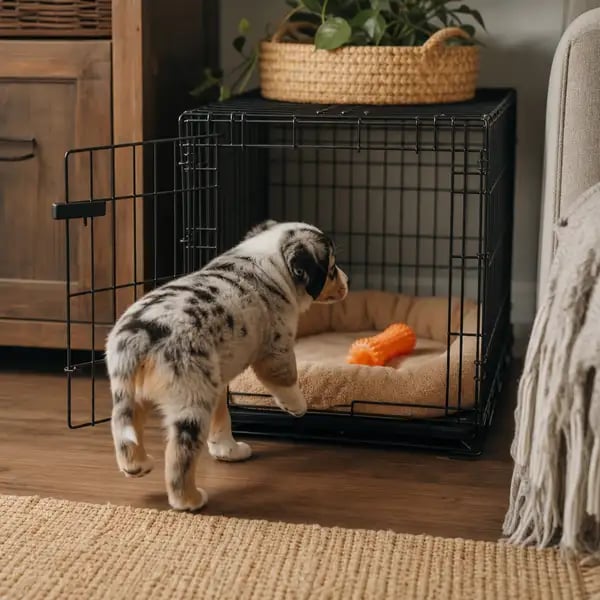
To crate train a puppy step by step, build positive associations in stages: first let them explore with the door open and treats, then feed meals inside, then practice short closed-door sessions with rewards, gradually extend the time and add a cue, and only then leave the room and the house. Move to the next step only when your puppy is relaxed at the current one — comfort sets the pace, not the calendar.
The AKC's step-by-step crate training approach, echoed across humane and positive-reinforcement sources, follows the five stages below. One adult-dog training resource suggests it often takes around four weeks of structured practice to reach calm, reliable crate time; young puppies use shorter sessions because of their bladders, and especially sensitive pups may need longer. None of these timings are deadlines — they are gentle guides.
Secure the door so it cannot swing and startle anyone, pop a soft bed inside, and scatter a little trail of treats leading in. Let your puppy investigate entirely at their own pace — no pushing, no luring them in and shutting the door. Praise quietly each time they step in. The AKC and trainers suggest keeping these very short and easy, often just two to five minutes, several times a day. The goal here is purely emotional: "this box is a nice place."
Food is a powerful, happy signal, so once your puppy enters willingly, start serving meals in the crate. For a hesitant pup, place the bowl just inside the door at first, then move it a little further back over successive meals until they are eating happily at the back wall. Only then, gently close the door while they eat and open it again as they finish. Petplace suggests building from a few seconds up to about ten minutes of staying in after the meal, over several feedings. Because meals happen two or three times a day, this gives you lots of low-pressure practice.
Now add closed-door time outside of meals, with you staying right there. Pick a moment just after a toilet trip and a little gentle play, when your puppy is naturally sleepy. Settle them in with a safe chew or stuffed food toy, close the door, and sit nearby reading or working. Start with mere seconds to a couple of minutes, calmly dropping the occasional treat to reward quiet. If whining starts, the SPCA of Wake County and Petplace advise waiting for a brief pause before opening the door, so quiet — not noise — is what earns release.
Once your puppy relaxes for a few minutes with the door shut, slowly stretch the time — five minutes, then ten, then twenty — always with a good chew, and changing only one thing at a time. Add a friendly cue like "crate" or "kennel" just as they are about to walk in, then reward them inside; over many repeats, the word comes to mean "go to your lovely bed." Crucially, use crate time during ordinary moments too — after a walk, during dinner — so it is not always a sign you are about to leave.
Only when your puppy rests calmly with you present should you start brief absences. Step out of the room for a minute or two with your puppy settled and chewing, then return calmly and let them out during a quiet moment. The AKC notes that when you add distance you should temporarily shorten the time, so you are not piling a longer stay and your absence on at once. Build gradually to short trips out of the house — putting your puppy in ten to fifteen minutes before you go, and skipping dramatic goodbyes, helps a lot. Always keep absences within your puppy's age-appropriate toilet limits.
How do you handle the crate at night?
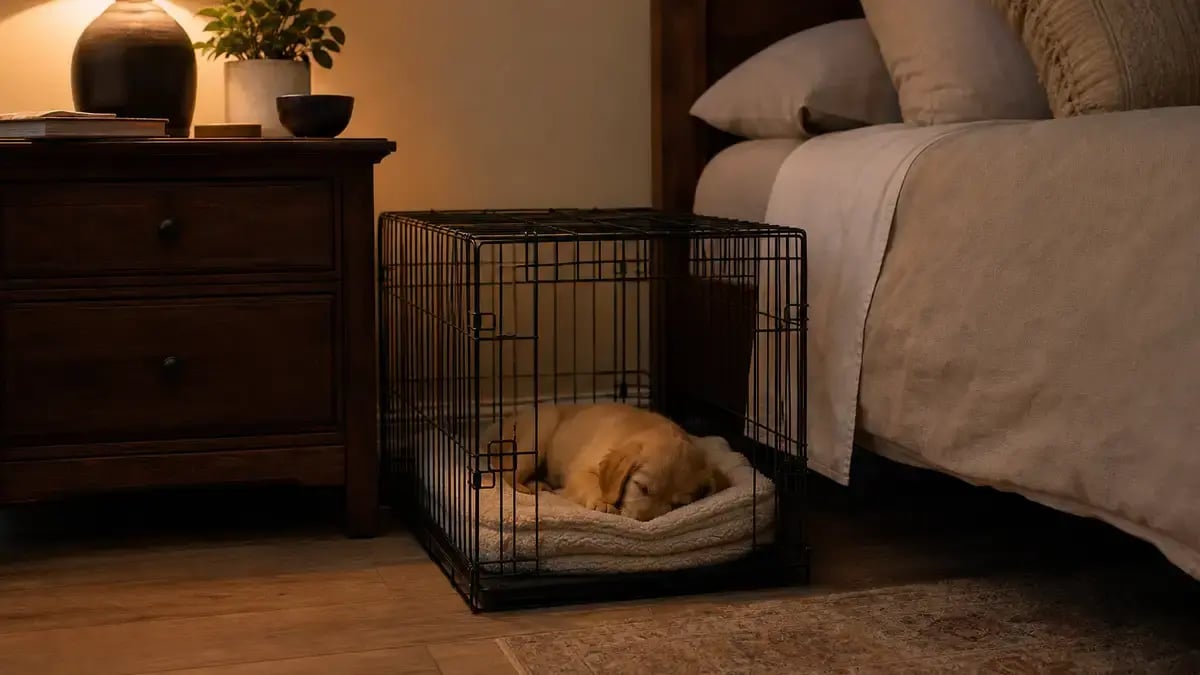
At night, place the crate in or beside your bedroom for the first weeks so your puppy can hear and smell you and settle more easily — and so you can hear when they need to go out. Expect one or two toilet trips for a young puppy, keep those trips quiet and boring, and try to tell a genuine "I need to go" from ordinary settling protest before you react.
A brand-new puppy has just left their mother and littermates, so a silent, faraway room can feel frightening. Keeping the crate close — with a soft blanket and perhaps a worn cloth that smells of home — helps enormously, and the AKC notes it also lets you catch the early signs that your puppy needs the garden before there is an accident or a meltdown. Worried this will "spoil" them or make solo sleep harder later? It generally does not: once your puppy feels secure, gradually moving the crate further away over a few weeks is straightforward.
For toilet trips, a realistic expectation at eight to twelve weeks is one or two breaks overnight, in line with the common "age in months plus one" rule of thumb for how long a young puppy can hold their bladder. Take your puppy out for a final toilet trip right before bed, and if they wake and genuinely need to go, carry or walk them quietly to the same spot on a leash, wait, reward calmly, and bring them straight back to the crate. The trick is to keep these trips dull — minimal talking, no play, no exciting treats — so they never become a fun midnight party your puppy starts requesting.
Telling a real toilet need from protest is not an exact science, but patterns help. A puppy who wakes after a decent stretch, fusses, and grows more urgent is probably signaling a genuine need — and will usually pee quickly outside, then be ready to settle. A puppy who cries the instant the door closes at bedtime, or kicks off the moment they notice you move but shows no urgency after long intervals, is more likely voicing ordinary protest about being alone. Jotting down a quick log for a few nights — when they last went out, when they cried, whether they actually toileted — makes the pattern obvious surprisingly fast.
How long can a puppy stay in a crate?
A puppy should only be crated for short, age-appropriate stretches — never all day. The SPCA of Wake County suggests up to about one hour at 8 to 10 weeks, two hours at 11 to 12 weeks, three hours at 13 to 16 weeks, and around four hours for dogs over four months during the day, with even adult dogs usually capped at four to six daytime hours. If you will be out longer, use a puppy-proofed pen or gated room instead.
Two things set these limits: a puppy's physical ability to hold their bladder, and their emotional need to move, play and be with you. The San Diego Humane Society shares a widely used rule of thumb that a puppy can hold their bladder for roughly their age in months plus one hour — so a three-month-old might manage around four hours under calm conditions, and far less after drinking, eating or playing. Treat every one of these figures as a ceiling to stay under, not a target to hit. Most positive trainers prefer shorter, more frequent crate spells woven through the day.
Daytime guideline adapted from the SPCA of Wake County crate training guidance, with adult ranges drawn from a synthesis of ASPCA and humane-society advice. These are upper limits, not goals — adjust to your individual puppy, and always pair crate time with toilet breaks, exercise and company.
What about when life means being out longer than these limits? The honest answer is: don't stretch the crate to cover it. Instead, set up a larger "long-term" space — an easy-clean room like a kitchen or a sturdy exercise pen — with the crate left open inside, plus water, safe chews, and, while house training, a toilet area such as pads or turf at the far end. This lets your puppy move, stretch and choose where to rest while your home stays protected. For genuinely long absences, humane organizations encourage real help: a trusted dog walker, a midday visit from a neighbor, or reputable doggy day care. These are not luxuries — they are part of looking after a young, social animal well.
Crate training is one piece of the first few weeks
Feeding, vaccinations, potty training and that all-important first vet visit all happen at once. Our complete New Puppy Care guide pulls it together calmly in one place — and our puppy's first week checklist gives you a calm day-by-day schedule for that critical first week.
Read the New Puppy Care guideWhat if your puppy cries or whines in the crate?
If your puppy cries in the crate, first make sure their basic needs are met — toilet, a chew, not over-tired — then aim to reward quiet rather than noise: wait for a brief pause in the whining before opening the door, so calm earns release. Some crying in the first few nights is normal. Frantic, escalating panic is different, and a signal to slow right down and seek help.
It helps to know why puppies vocalize. Crying can mean distress at being apart from you, frustration at confinement, boredom, a genuine toilet need, or — once they have learned it — a way to get the door open. That last one is the trap. If the door reliably opens the instant your puppy cries, you accidentally teach them that crying is the magic key, and it gets louder and longer. The SPCA of Wake County's advice is to wait until your puppy has been quiet for at least a brief moment before you go to them, so quiet is what predicts attention. Prevention matters just as much: most crate meltdowns happen when a puppy is over-tired, under-exercised, or bursting for the toilet, so that calm "crate cycle" heads off a lot of tears.
Now the important balance, because "reward quiet" is not the whole story. You should never ignore a genuine need, especially overnight when a real toilet trip is due — leaving a puppy to soil their bed, or to panic, damages trust and the crate association. So meet the need first; just keep the trip boring and functional, and look for that small pause before opening rather than flinging the door wide mid-scream.
Finally, learn to spot the difference between protest and true distress. A puppy who grumbles a little but settles for longer and longer stretches is doing fine. A puppy — or older dog — who quickly escalates to panicked screaming, heavy drooling, soiling, or desperately trying to escape whenever confined may be experiencing real confinement or separation distress, and "waiting it out" tends to make that worse, not better. Respected veterinary behaviorists caution that for some dogs, crating can actually intensify separation anxiety rather than fix it. If you see those red flags, stop pushing the crate and talk to your vet or a qualified, reward-based behaviorist — that is the kind, sensible next step, and it is covered in our note below.
Common crate-training mistakes to avoid
The most common crate-training mistakes are going too fast, using the crate as punishment, getting the size or placement wrong, and overusing it. Almost all of them are easy to avoid once you know them — and easy to recover from by simply slowing down and rebuilding good feelings about the crate.
- Going too fast (flooding). Shutting a brand-new puppy in for hours, or leaving the house after only a session or two, can overwhelm them and create lasting fear of the crate. Frantic scratching, repeated high-pitched screaming, panting and drooling are signs to step back, not push on. Return to open-door treats and meals, and rebuild slowly.
- Using it as a "time-out jail." Marching your puppy to the crate while scolding them poisons the very feeling you are trying to build. If you need to interrupt over-excitement, use a calm, neutral settle spot — or escort them gently with a chew and no telling-off.
- The wrong size or spot. Too small is uncomfortable; too large invites corner-toileting; a crate in a draft, in full sun, or isolated far from the family makes resting hard. Adjust the size with a divider and move the crate to a calm but sociable spot.
- Overusing the crate, or ignoring real problems. A crate is not a place to "store" a dog all day and all night. And if your puppy keeps soiling the crate despite sensible timing, or panics every single time, that is information — a possible medical issue or genuine distress that deserves a vet's input, not simply more crating.
Crate training FAQ
Is crate training cruel?
No — done gradually and kindly, it is not cruel. A correctly sized crate becomes a safe resting place your puppy chooses for themselves, and it helps with house training, safety and vet visits. It only becomes unkind if it is rushed, used as punishment, or relied on for long hours without exercise, company and enrichment.
How long does it take to crate train a puppy?
It varies, but reaching relaxed, reliable crate time usually takes several weeks of short, positive sessions rather than days. One adult-dog resource suggests around four weeks of structured practice, and sensitive puppies may need longer. Your puppy's comfort sets the pace, not the calendar.
How long can a puppy stay in a crate?
The SPCA of Wake County suggests roughly one hour at 8 to 10 weeks, up to two hours at 11 to 12 weeks, up to three hours at 13 to 16 weeks, and up to about four hours over four months during the day. A common rule of thumb is age in months plus one for bladder control. For longer absences, use a pen or gated room.
Should I let my puppy cry it out in the crate?
Not fully — pure "cry it out" can leave a genuine toilet need unmet and erode trust. Meet basic needs first, then reward quiet: wait for a brief pause before opening the door, so calm rather than noise earns freedom. A little crying in the first nights is normal, but frantic, escalating panic means it is time to step back and seek help.
Where should the crate go at night?
For the first weeks, place it in or beside your bedroom so your puppy can hear and smell you and settle, and so you can hear when they need to go out. As they grow more confident, you can gradually move the crate further away or into another room.
What size crate does my puppy need?
Just big enough to stand up fully, turn around, and lie down on their side — no bigger, or they may sleep in one corner and toilet in another. Since puppies grow fast, buy the adult size and use a divider panel to shrink the space while they are small.
Can you crate train an older puppy or rescue dog?
Yes. The same gentle, step-by-step method works for older puppies and adult dogs, though a dog with bad past experiences may need extra patience and high-value treats. If a dog truly panics whenever confined, stop and speak to your vet or a qualified behaviorist before continuing — a crate can make genuine confinement distress worse.
General information only — not veterinary advice. Always consult your own vet or a qualified behaviorist for guidance specific to your puppy.
Sources: AKC — Step-by-Step Crate Training; AKC — Why Crate Training Is Great; SPCA of Wake County — Crate Training; San Diego Humane Society — Potty Training; Petplace — Crate Training Your Puppy; Adopt a Pet — How Long Can I Crate My Dog?; AVMA — Dog Welfare & Housing. Last updated June 2026.