Your Puppy's First Week at Home: The Complete Checklist
By Michael Probert · Updated June 2026
The first week is a blur of cuteness, exhaustion, and more puppy pee than you thought possible. This checklist walks you through everything — from puppy-proofing before they arrive to the first vet visit and how to actually sleep again.

The first week comes down to three things: keep your puppy safe, build the routine (sleep, meals, potty, crate), and visit the vet in the first few days. Everything else — training, socialization, bonding — stacks on top of those foundations. Calm, consistent, and patient is the whole game.
There is a reason first-time puppy owners look simultaneously overjoyed and slightly panicked. The combination of a creature that is adorable, entirely dependent on you, and operating on a completely different schedule from yours is a lot. But here is what experienced owners know: the first week is the hardest, and the framework is actually simple. The more routine and predictability you build from day one, the faster your puppy settles — and the faster you stop being woken up at 2am.
At Honest Hound, we have put this checklist together from guidance by the American Kennel Club, VCA Hospitals, and leading humane societies, cross-checked against first-hand experience. Let's walk through it.
What Should I Have Ready Before My Puppy Comes Home?
The best arrival day is one where you are not scrambling for a crate or running to the pet store for enzymatic cleaner while your puppy circles the living room. Get everything sorted the day before.
The core shopping list:
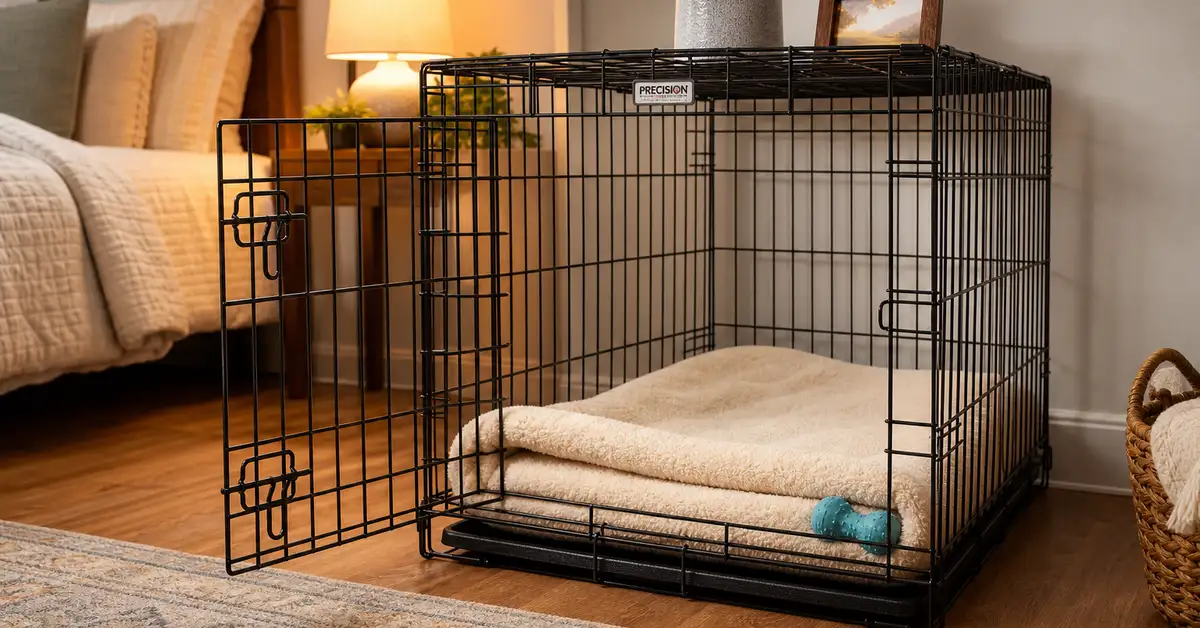
- Crate — sized for their adult body, with a divider panel to shrink it while they are small. A correctly sized crate is your most useful house-training tool because puppies naturally avoid soiling where they sleep. See our guide to the best dog crates for help choosing.
- Soft crate bedding — start inexpensive and washable. The AKC advises against plush beds at this stage, as many puppies chew them apart into long, swallowable strips.
- Food and water bowls — stainless steel or ceramic, non-slip bases. Easier to keep clean, less likely to harbor bacteria than porous materials.
- Puppy-appropriate food — ideally continue whatever the breeder or shelter was feeding for at least the first week. Switching foods adds digestive stress on top of everything else.
- Flat collar + ID tags + leash — the tag should have your phone number on it from day one. The collar fits correctly when two fingers slide under easily but it cannot slip over their head.
- Teething toys and chews — puppy-formulated teethers are softer and soothe sore gums. A food-stuffable rubber toy is enormously useful for crate time.
- Enzymatic cleaner — regular cleaners mask the smell of urine to your nose but not your puppy's. Enzymatic cleaners actually break down the proteins that signal "bathroom here." Buy a large bottle.
- Baby gates — to limit your puppy to one safe, supervised area until house training is reliable.
Puppy-proofing in brief: Walk every room at floor level and remove anything chewable, swallowable, or toxic. Tuck away electrical cords, lock cleaning products and medications in closed cabinets, secure trash cans with locking lids, and check outdoor areas for plants toxic to dogs — sago palm, lilies, azaleas, and grapes are among the most dangerous.
Before arrival, decide two things: where your puppy will sleep (a crate in your bedroom is the most widely recommended setup for the first weeks, so they can hear you) and where the designated outdoor potty spot is. Having both decided in advance removes ambiguity on arrival day — for you and for them.
What Should I Do on Arrival Day?
Your main job on arrival day is to start as you mean to go on: calmly, with a routine, and with your puppy's overwhelm kept low. The San Diego Humane Society's 3-3-3 rule is a realistic framework: most puppies need 3 days to decompress and stop feeling scared, 3 weeks to learn the household routine and feel comfortable, and 3 months to truly feel at home and show their real personality. The first week is just the beginning of that arc.
The car ride home. Keep your puppy in a secured crate or carrier — not loose in someone's lap. Line it with an absorbent pad, keep the car calm and quiet, and avoid stops where strangers rush to pet them. Some puppies drool or whine from motion sickness or anxiety; that is normal.
First stop, before going inside: the potty spot. Carry or walk them on leash directly to the designated outdoor area. Wait quietly. The moment they eliminate, praise warmly and give a small treat. This is the single most repeated pattern of their entire first week, and you set it here on day one.
Inside: go slow. Resist the urge to give a grand tour. The AKC recommends limiting the puppy to one supervised area at first and introducing other rooms gradually. No matter how excited your household is, hold off on a crowd that first day. Introduce family members one at a time, quietly, letting the puppy approach each person on their own terms.
First meal. Continue the breeder's or shelter's food and feeding schedule. Offer a small meal after the puppy has had a chance to toilet and settle. If they do not eat right away, offer again in a couple of hours — skipping a first meal is very common.
First night. Place the crate in or beside your bedroom with a soft blanket inside. Run a simple pre-bed routine: calm play, a final potty trip, a stuffed chew in the crate, then lights low. Expect at least one overnight wake-up for a toilet break — most 8-week-old puppies cannot make it through the night without one, and that is completely normal.
How Do I Set Up a First-Week Routine?
Predictable rhythm is your single most powerful tool this week. Puppies settle faster, house train faster, and cry less when they can anticipate what comes next. Build your day around four anchors.
Sleep: 18 to 20 hours per day. According to the AKC, young puppies genuinely need this much sleep, and wake windows between naps are often only 30 to 90 minutes. Follow your puppy's lead and do not keep them up past when they seem tired. Overtired puppies bite more, settle worse, and have more accidents.
Meals: 3 to 4 times per day. Puppies under four months typically need three to four meals per day, spread evenly through the day. Avoid free-feeding — timed meals give you control over the predictable potty timing that follows eating. Your vet can fine-tune the amount based on your puppy's breed, weight, and the food you are using.
Potty breaks: every 1 to 2 hours. Take your puppy out every one to two hours while they are awake, plus immediately after every meal, nap, and play session. A phone reminder helps in the first few days. Every time they go outdoors is a win; every accident indoors is a small setback because the scent can draw them back.
Crate time: for every nap and overnight. A puppy who cannot be actively supervised should always be in the crate or a gated safe zone. Use meal times and stuffed chew toys to make crate time something your puppy looks forward to rather than something that only happens when you leave. Our step-by-step crate training guide walks through the whole gentle process.
Sample first-week daily rhythm
Wake-up: Straight out to the potty spot before anything else.
Morning: Breakfast → potty → 20–30 min supervised play → nap in crate (1–2 hours).
Midday: Potty → midday meal (if feeding 4×/day) → 2–3 min training → potty → nap.
Afternoon: Potty → dinner → gentle play → potty → nap.
Evening: Calm family time → final potty → crate for night. Expect 1–2 overnight potty trips.
The routine works best with a crate your puppy loves.
Crate training is a step-by-step process of its own — and doing it gently makes the first week go much smoother. We have a full guide, plus our honest picks for the best crate for every size and stage.
When Should I Visit the Vet — and What Happens?
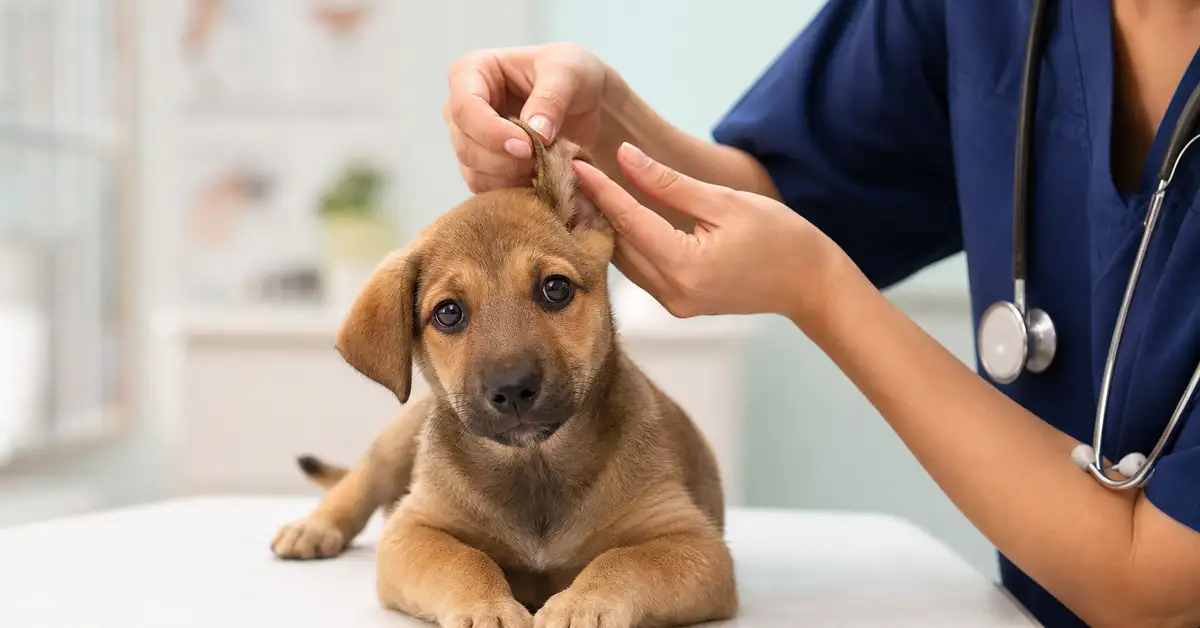
Book the first vet visit within the first 48 to 72 hours if the breeder or shelter specifies it, and within the first week at the latest. Many sales contracts require this. Even when it is not required, getting a health baseline early is strongly recommended — your vet wants to see your puppy before the vaccine schedule starts.
At the visit, your vet will do a head-to-tail physical exam: eyes, ears, heart, lungs, abdomen, musculoskeletal system, and skin. They will review whatever vaccines were given by the breeder, assess body condition and weight, and discuss a going-forward schedule.
Core vaccine schedule (based on current AAHA guidelines and AAHA 2022 canine vaccination guidance): the DHPP combination vaccine — covering distemper, hepatitis, parvovirus, and parainfluenza — is typically given at 8, 12, and 16 weeks. Rabies is given at 12 to 16 weeks, depending on state law and the specific product. Your vet may also recommend Bordetella (kennel cough), and depending on where you live, leptospirosis and Lyme disease vaccines.
Your vet will also screen for intestinal parasites, which are very common in puppies, and discuss heartworm prevention — in most parts of the US this should begin right away and continue year-round.
Bring a list of questions. Good ones for the first visit: Is the food I'm using right for this breed and size? How much per meal and how often? When should we discuss spay or neuter? What flea and tick prevention do you recommend for this age and weight? Are there puppy classes you trust locally?
Can I Socialize My Puppy Before All Their Vaccines Are Done?
Yes — and you need to, carefully. This is one of the most consequential decisions of the first week, because the prime socialization window runs from roughly 3 to 16 weeks, according to VCA Hospitals. Your puppy comes home at around 8 weeks old. Full vaccination is not complete until 16 to 17 weeks. You cannot wait — the window will be nearly closed by the time they are fully protected.
The goal in week one is not to expose your puppy to everything at once. It is to give them short, positive encounters with the kinds of people, animals, sounds, and environments they will encounter throughout their life — at a pace that keeps them curious rather than frightened.
Safe before full vaccination:
- Carry your puppy in your arms to busy streets, parks, or shopping center parking lots — they observe the world without setting foot on ground where unknown dogs have been.
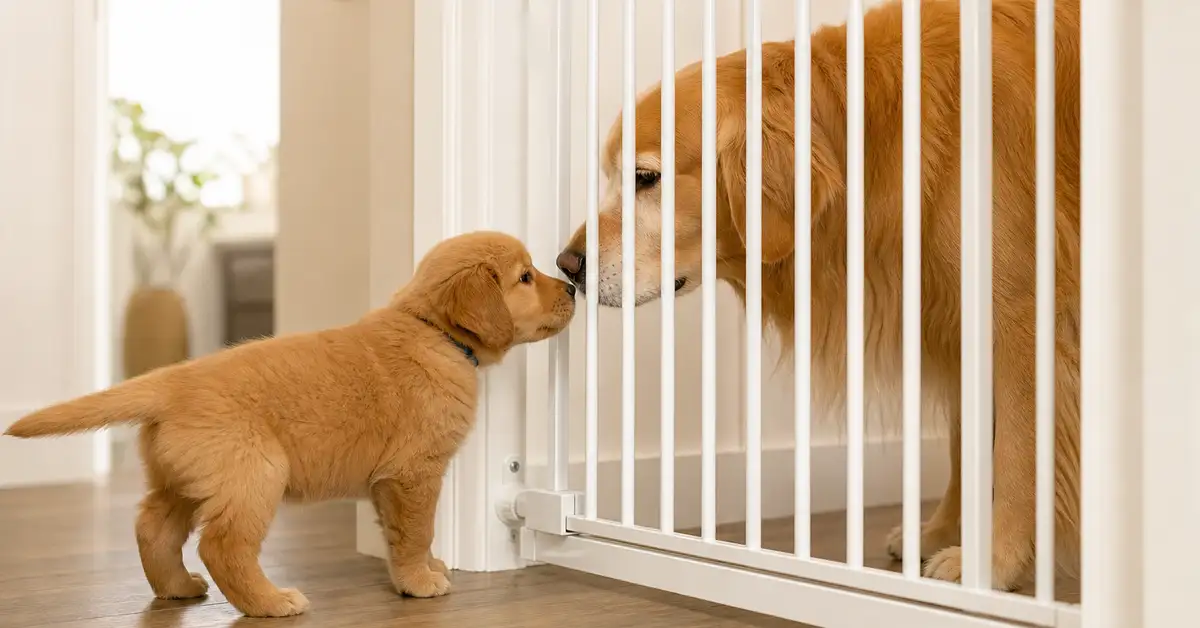
- Invite calm, fully vaccinated adult dogs to your home for short, supervised play sessions. Known dogs on familiar turf is low risk.
- Expose them to household sounds at low volume: the vacuum cleaner, blender, television, doorbell.
- Let them meet a variety of people — different ages, appearances, people wearing hats and glasses — in quiet settings where the puppy can approach at their own pace.
- Consider a puppy socialization class at a reputable facility with vaccination and health-screening requirements. VCA Hospitals notes that well-run puppy classes are safe and beneficial even before full vaccination.
Wait until fully vaccinated: dog parks, pet store floors, beaches and trails with high dog traffic, and any contact with dogs of unknown vaccination status.
Watch your puppy's body language throughout. Signs of fear — freezing, tail tucked, ears back, refusing treats — mean you have moved too fast. Back up, reduce intensity, and try again more gradually. Rushing a frightened puppy through a scary experience builds lasting negative associations, not confidence. Slow and positive always wins.
What Is Normal in Week One — and What Should Worry Me?
Part of surviving the first week without unnecessary panic is knowing what is normal. Here is a quick reference.
Completely normal in week one:
- Whining and crying at night — especially the first two or three nights as they adjust to life without their littermates. It eases.
- Accidents — many of them. Aim to get better each day, not perfect immediately. Every puppy has accidents in week one.
- Loose stools. Stress and a possible diet transition can cause mild soft stools for a day or two.
- Not eating much on day one — extremely common and usually resolves by day two or three.
- Sleeping 18 to 20 hours per day. That is not too much — it is exactly right for this age.
- Mouthing and biting everything. Normal puppy play behavior. Redirect to appropriate chew toys consistently; never use hands as toys.
- Startling at sounds — their world is entirely new. Gentle, positive exposure helps them build confidence.
Call your vet if you see:
- Refusing all food for more than 24 hours
- Vomiting more than once, or any vomiting that looks like it could contain blood
- Bloody or very dark (tarry) stools
- Unusual lethargy — not just tired, but hard to rouse or uninterested in everything including treats
- Coughing, wheezing, or labored breathing
- Discharge from the eyes or nose
- No urination for more than 8 to 10 hours
New puppies are resilient, but they are also small and young. When something seems genuinely wrong, do not wait and see for more than a few hours. A call to your vet's office — or an after-hours line — is always the right move.
Can I Start Training This Week?
Yes, and you should. VCA Hospitals notes that handling, socialization, and basic training should begin the day your puppy comes home. The key is keeping sessions extremely short — one to three minutes, several times a day — and using only positive reinforcement with small, soft treats. No punishment or harsh corrections at any stage.
In week one, focus on:
- Name recognition: say their name, reward with a treat when they look at you. Simple and deeply useful.
- Collar and leash comfort: let them wear the collar around the house; briefly drag the leash in a safe area so it feels normal.
- Crate as a wonderful place: toss treats inside, feed meals in there, reward calm crate time.
- Sit: lure with a treat held just above their nose until their bottom hits the floor, then reward immediately. Keep it short and fun.
- Come when called: crouch down, say "come" in a happy voice, and reward enthusiastically when they reach you.
The goal this week is not a puppy that follows commands reliably. It is building the association that paying attention to you is a rewarding idea, and that learning is a fun game. Get that foundation right in week one, and everything that follows — crate training, potty training, leash walking — gets easier.
For the house-training piece, our puppy potty training guide goes step by step through the whole method, including what to do (and what not to do) when accidents happen.
Frequently Asked Questions
How long does it take for a puppy to settle in?
A common framework is the 3-3-3 rule: 3 days to stop feeling overwhelmed, 3 weeks to learn the routine and feel comfortable, and 3 months to truly feel at home. Some puppies settle faster; anxious or undersocialized puppies may need longer. Consistent routine is the biggest single factor.
How much should an 8-week-old puppy sleep?
Around 18 to 20 hours per day — which sounds like a lot, and is correct and healthy for this age. Keep play and training sessions short and let your puppy rest when they seem tired. An overtired puppy bites more and settles worse at night.
How often does an 8-week-old puppy need to go out?
Every one to two hours while awake, plus immediately after eating, drinking, waking up, or finishing play. At night, most 8-week-old puppies need at least one outdoor break. The rule of thumb "age in months plus one" gives the rough maximum hours they can hold their bladder — treat it as a ceiling, not a target.
Is it normal for a puppy not to eat the first day?
Very common. The car ride, new environment, and separation from littermates are stressful, and many puppies skip a meal or eat less in the first 24 hours. Offer food calmly on schedule. Call your vet if they refuse all food for more than 24 hours, or if appetite loss comes alongside vomiting, diarrhea, or lethargy.
When can my puppy go to public places?
Full public exposure — dog parks, pet store floors, busy areas with high dog traffic — should wait until one week after the final core puppy vaccine, typically around 16 to 17 weeks. Before then, carry them in your arms to observe the world, visit the homes of vaccinated dogs, and consider a puppy class designed for the pre-vaccination window.
What warning signs should make me call the vet?
Call promptly if your puppy refuses food for more than 24 hours, vomits more than once, has bloody or black stools, is unusually lethargic or hard to rouse, is coughing or wheezing, has discharge from the eyes or nose, or is not urinating at all. In young puppies these things can escalate quickly — when in doubt, call.
Should I let everyone meet the new puppy right away?
Hold off on a crowd the first day or two. The AKC recommends introducing family members one at a time, quietly, letting the puppy approach on their own terms. Once they are showing relaxed, curious behavior — usually by day two or three — invite calm visitors. Always supervise children and coach them to be gentle and let the puppy come to them.
General information only — not veterinary advice. Always consult your own vet for guidance specific to your puppy.
Sources: AKC — New Puppy Checklist; VCA Hospitals — Puppy Socialization; VCA Hospitals — Puppy Behavior and Training Basics; San Diego Humane Society — New Puppy Checklist; ASPCA — Toxic and Non-Toxic Plants; AAHA — 2022 Canine Vaccination Guidelines; Chewy — Puppy Feeding Guide. Last updated June 2026.