The 12 Best No-Pull Dog Harnesses of 2026
By Michael Probert · Updated June 2026
A dog who hauls you down the street isn't being bad — they just haven't learned that pulling doesn't work yet. The right no-pull harness takes the strain off your arm and their throat while you teach them, and these are the ones worth buying in 2026.
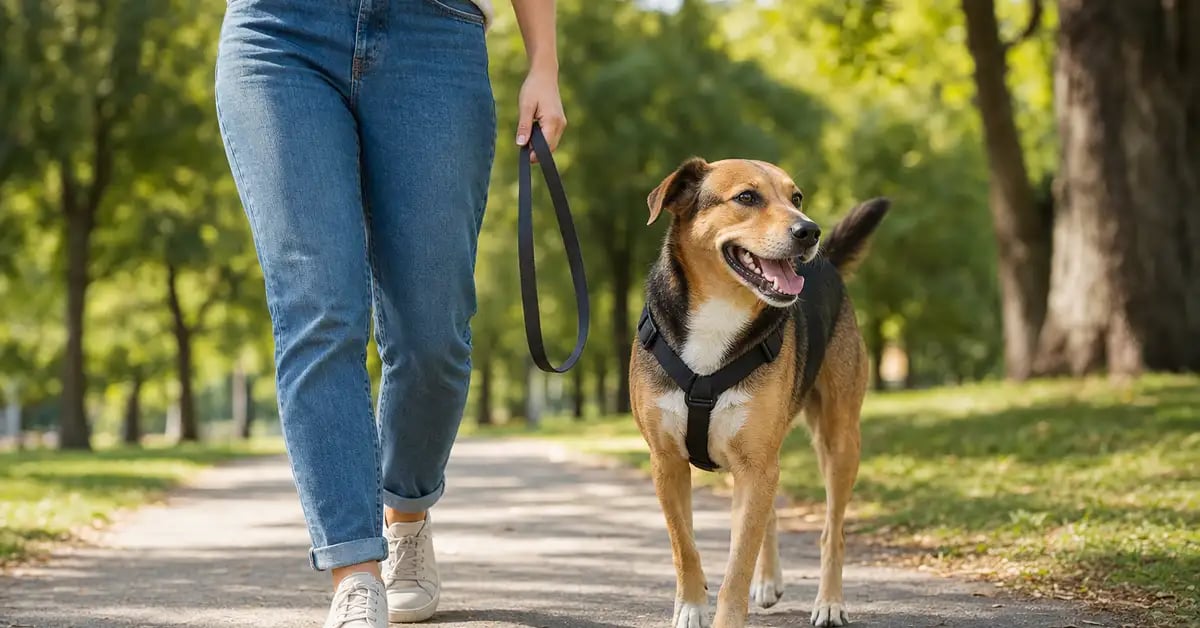
For most dogs, the front-clip PetSafe Easy Walk is the best all-round no-pull harness. Strong pullers or escape artists want the 2 Hounds Freedom (dual-clip + martingale); comfort-seekers the Blue-9 Balance; small dogs the Sporn; big dogs the ICEFANG; and for a dog that overpowers any harness, a Gentle Leader head halter. Whatever you pick, a harness works best with training, not instead of it.
At Honest Hound, we didn't strap a dozen harnesses on a Labrador in a car park. We read the people who did — Rover, who interviewed two veterinarians and tested with their own dogs, and Dogster's vet-collaborated team — and cross-checked fit and safety against AKC guidance. Here's the honest shortlist for 2026, matched to your dog and how hard they pull.
At a glance: all 12 picks
Prices shown as qualitative bands ($ = budget through $$$$ = investment) rather than exact figures, which change constantly. Tap any pick to jump to the full write-up.
How we chose (2026)
We're a research-led site: we don't buy or hands-on test harnesses, and we never claim testing we didn't do. For this guide we compared the harnesses most consistently recommended across reputable, independent reviews — Rover (which interviewed two vets and tested with its own dogs), Dogster (vet-collaborated), and outdoor-gear testers at NBC Select and CNN Underscored — and cross-checked fit and safety with the AKC. Read our full research method.
Why a harness — and the one thing no harness can do
A flat collar puts all the force of a lunge straight onto your dog's throat and windpipe; a harness spreads it across the chest, which is why vets recommend one for pullers, small dogs, brachycephalic (flat-faced) breeds and any dog prone to a collapsing trachea. A front-clip harness adds a second trick: the chest leash ring turns your dog back toward you when they surge, so pulling stops getting them anywhere. But here's the honest part the vets stress — no harness is a cure for pulling. It's a management tool that makes walks safer and easier while you teach loose-leash walking with rewards. Buy the right harness, then put in the training, and you'll get a dog who walks nicely in any gear.
Front-clip vs. back-clip vs. head halter
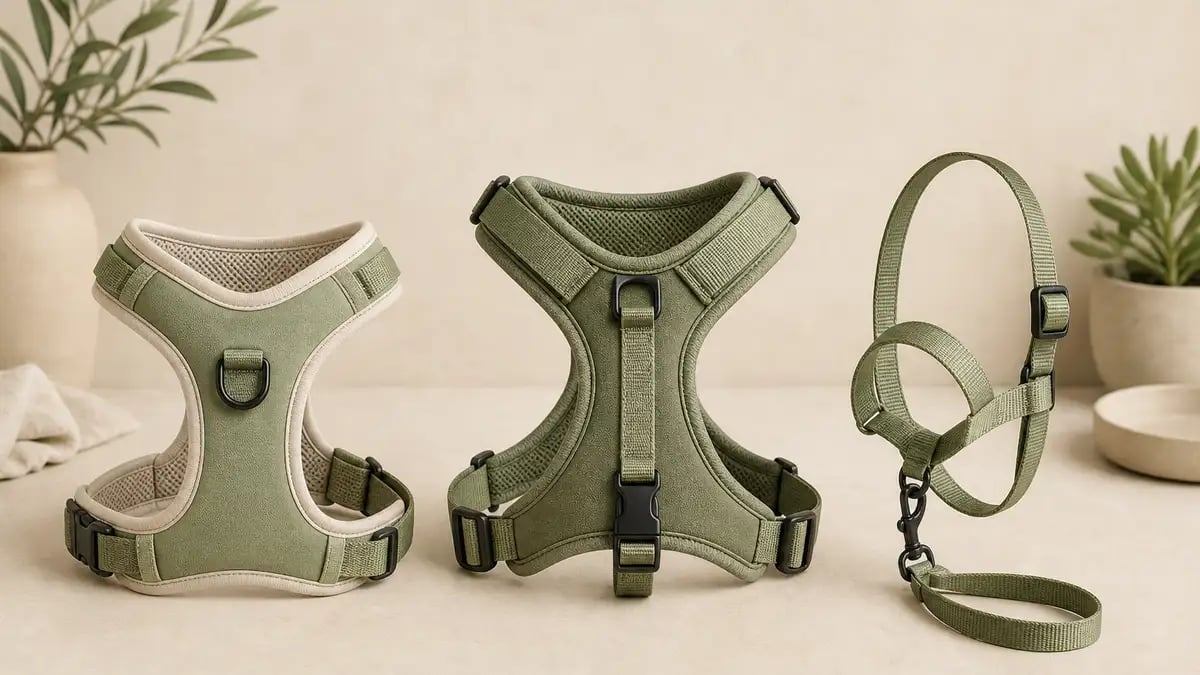
Three families cover almost everyone. Front-clip harnesses (leash ring on the chest) are the true no-pull option — they steer a puller sideways and suit most dogs that tug. Back-clip harnesses (ring on the back) are comfy and great for dogs that already walk well, but can make a hard puller worse. Head halters (Gentle Leader, Halti) fit over the muzzle and give the most control for a dog that overpowers a body harness — at the cost of some acclimation. Many of the best harnesses are dual-clip, giving you a front ring for training and a back ring for relaxed walks. Match the type to how hard your dog pulls and you're most of the way there.
The 12 best no-pull dog harnesses, ranked
Our picks run from the front-clip all-rounder most dogs should start with, through options for strong pullers, comfort, small and large dogs, the car, the trail, and head halters for the toughest cases. Each entry says who it's really for.
PetSafe Easy Walk Harness
Best OverallWhat it is. The most-recommended front-clip no-pull harness — the chest leash ring gently turns your dog toward you when they pull, and the strap sits across the breastbone, not the throat, so there's no choking.
- Front chest leash ring redirects pulling
- Quick-snap shoulder and belly straps
- Rests across the chest, not the neck
- Minimalist and breathable
- Many sizes and colors
- Dogster's Best Overall
- Works immediately for mild–moderate pullers
- Very easy to put on; affordable
- Not reflective
- Single front clip — strong/large pullers may want dual-clip
- Can rotate if mis-sized
Why it's on the list: Dogster names the Easy Walk its Best Overall, and it's the single most widely recommended front-clip harness — the safe default for a dog that pulls, redirecting them sideways instead of pressing on the throat.
Check price on Amazon2 Hounds Design Freedom No-Pull
Best for Strong Pullers & Escape ArtistsWhat it is. A US-made dual-clip harness with front and back D-rings, an included double-ended training leash, and a martingale loop on the back that gently tightens to discourage pulling and stop backing out.
- Front + back D-rings + included double-ended leash
- Martingale loop (anti-escape and pull cue)
- Velvet lining prevents chafing behind the legs
- Stainless hardware + heavy nylon
- Four adjustment points; chew-replacement warranty; US-made
- Rover's Best for Serious Pullers (vet-backed)
- Martingale resists escape
- Front strap sits below the trachea / above the leg muscles
- Pricier
- More straps to fit; two-clip leash takes practice
Why it's on the list: Rover's vet-interviewed Best-for-Pullers pick — dual D-rings plus a martingale loop give maximum control and escape resistance, with a front strap positioned to avoid the windpipe.
Check price on AmazonBlue-9 Balance Harness
Best for Comfort & FitWhat it is. A highly adjustable belt-style harness — six adjustment points and a neck buckle — that sits further back to free the shoulders, a favorite for avoiding chafing and protecting natural movement.
- Six adjustment points + neck buckle (no over-the-head)
- Dual D-rings (front + back)
- Sits back, off the shoulders
- Fits a wide range of shapes; light belt design
- Rover's Best Anti-Chafing (vet-noted)
- Doesn't restrict shoulder movement
- Neck buckle suits dogs that hate over-the-head; superb custom fit
- Straps can twist
- Minimal padding (it's a belt design)
Why it's on the list: Rover's Best Anti-Chafing pick — its six-point fit and shoulder-freeing placement make it the comfort and gait choice trainers favor, with dual rings for no-pull control.
Check price on AmazonFrisco Padded Nylon No-Pull
Best ValueWhat it is. Chewy's budget no-pull harness — a padded over-the-head design with a front chest ring that spins a puller around, plus a back D-ring for everyday use.
- Front + back leash rings
- Padded; doesn't press the neck
- Over-the-head design
- Lots of sizes; very cheap
- Dogster's Best Value
- Genuinely works for the price
- Two attachment points; comfortable
- Basic — no reflectivity or extras
- Spend time on the initial fit
Why it's on the list: Dogster's Best Value — a simple, padded, two-ring no-pull harness that does the job for a fraction of the premium prices.
Check price on AmazonKurgo Tru-Fit Enhanced Strength
Best Crash-Tested (Car & Reactive)What it is. A heavy-duty dual-ring harness that doubles as a crash-tested car harness — steel hardware, well-stitched webbing and an included seatbelt tether, built to hold a lunging or reactive dog.
- Crash-tested as a car harness
- Steel fasteners; five adjustment points
- Front + back rings
- 10-inch seatbelt tether included
- Rover's Best for Reactive dogs
- Verified car-safety
- Very strong; doubles for walks and travel
- May not contain a determined escape artist
- Bulkier than a belt harness
Why it's on the list: Rover's Best-for-Reactive pick — crash-tested for the car and strong enough for a lunging dog, with dual rings and a seatbelt tether, so it works on the walk and the drive.
Check price on AmazonICEFANG Tactical Harness
Best for Large & Powerful DogsWhat it is. A rugged tactical harness in 1000D nylon with climbing-rated hardware, a control handle, MOLLE panels and five adjustment points — made to hold a big, strong puller.
- 1000D nylon + climbing-rated hardware
- Front + back attachment
- Control handle
- MOLLE side panels; five adjustment points
- Rover's Best for Large Dogs
- Extremely durable
- Handle for close control; great fit on big chests
- Too big / overkill for small dogs
- Pouches sold separately; runs warm
Why it's on the list: Rover's Best-for-Large-Dogs pick — tough 1000D nylon, climbing-grade buckles and a grab handle give real control over a powerful puller.
Check price on AmazonSporn Non-Pull Mesh Harness
Best for Small DogsWhat it is. A lightweight pull-on mesh harness for small dogs whose padded sherpa "sleeves" gently tighten under the front legs to discourage pulling — with no front chest ring to press a delicate chest.
- Padded sherpa sleeves gently tighten
- Breathable mesh vest
- Pull-on (no clips or straps to fuss with)
- Adjustable; small/medium
- Rover's Best for Small Dogs (vet-approved)
- No front D-ring on tiny chests
- Soft, light, all-weather
- Slip-on can be fiddly to put on
- Limited colors; smaller dogs only
Why it's on the list: Rover's Best-for-Small-Dogs pick — gentle tightening sleeves curb pulling without a front ring on a small dog's delicate chest, the setup vets prefer for tiny pullers.
Check price on AmazonJulius-K9 IDC Powerharness
Best Everyday Back-ClipWhat it is. The iconic back-clip working harness — a broad reflective chest strap, a grab handle, breathable skin-friendly mesh and very tough buckles for control and visibility on everyday walks.
- Broad reflective chest strap (+ glow labels)
- Top control handle
- Skin-friendly breathable mesh
- Heavy-duty buckles; many sizes
- A Dogster pick; extremely durable
- Great night visibility
- Handle for close control
- Back-clip — not a front-clip steer for hard pullers
- Premium price
Why it's on the list: A Dogster pick and a cult favorite — supremely durable with a reflective chest plate and grab handle. Choose it for everyday control and visibility, and pair it with training for a hard puller, since it's back-clip.
Check price on AmazonPetSafe Gentle Leader Head Collar
Best Head HalterWhat it is. A head halter (not a body harness) that fits over the muzzle and neck and turns the head to redirect a strong puller — powerful steering for dogs that out-muscle a harness, and an option for some breathing-issue dogs.
- Muzzle + neck loops steer the head
- Minimal straps (stays cool)
- Allows panting, barking and drinking
- For dogs that out-pull body harnesses
- Rover's Best Head Collar (vet-explained)
- The most control for a determined puller
- An option for some respiratory cases
- Dogs must be conditioned to it gradually
- Best for longer snouts; some find it aversive at first
Why it's on the list: Rover's Best Head Collar — by redirecting the head it gives the most leverage over a powerful puller; just introduce it slowly and kindly, as some dogs resist it at first.
Check price on AmazonHalti Headcollar
Best Head Halter (Runner-Up)What it is. A head halter with a looser, often better-tolerated fit than the Gentle Leader — a padded nose strap and reflective accents, turning the head to discourage pulling.
- Turns the head/body back toward you
- Adjustable nose + cheek straps
- Padded nose strap
- Reflective accents; affordable
- Rover's Head Collar runner-up
- The looser fit suits many dogs better
- Padded and reflective
- Looser fit — a Houdini dog may slip it
- Still needs acclimation
Why it's on the list: Rover's Head Collar runner-up — many dogs tolerate the Halti's looser, padded fit more readily than a Gentle Leader, though escape artists do better in the snugger Gentle Leader.
Check price on AmazonKurgo Journey Air Harness
Best for Hiking & Active DogsWhat it is. A lightweight, durable adventure harness with a breathable padded chest plate, front + back attachments, a control handle and reflective trim — built for the trail.
- Ripstop + breathable mesh padded chest plate
- Front + back attachment
- Back control handle
- Reflective; aluminum hardware
- Rover's Best for Hiking
- Tough yet comfortable; padded chest plate
- Handle for scrambles
- More coverage than a belt harness (warmer)
- Low neckline can let some dogs step through if mis-fit
Why it's on the list: Rover's Best-for-Hiking pick — a durable, padded, lightweight harness with front + back rings and a handle, made for active dogs and the trail.
Check price on AmazonRuffwear Front Range
Best Premium All-RounderWhat it is. The reviewers' perennial premium pick — a padded front + back-clip everyday harness with a reinforced front V-ring, four points of adjustment and an ID pocket, balancing comfort, control and durability.
- Padded chest + belly panels
- Reinforced aluminum front V-ring + back ring
- Four adjustment points
- ID pocket; reflective trim
- The most consistently top-rated premium harness across NBC Select, CNN Underscored and outdoor-gear testers
- Comfortable, durable, well-fitting
- Premium price
- Front ring suits mild–moderate pulling (hard pullers may want a head halter or martingale)
Why it's on the list: The premium all-rounder reviewers return to again and again (NBC Select, CNN Underscored, outdoor-gear testers): padded, durable and well-fitting with front + back clips — the upgrade pick when comfort and longevity matter.
Check price on AmazonFit & safety: getting it right
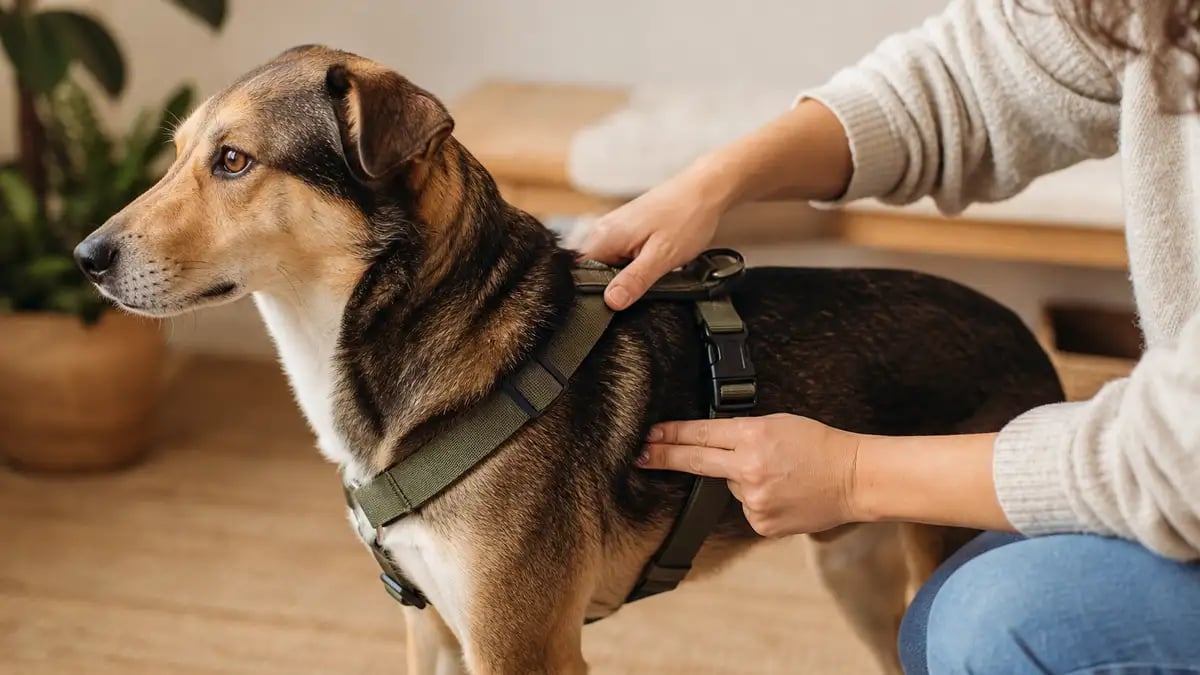
- Measure, don't guess. Sizing varies hugely between brands — measure chest/girth and neck and use the maker's chart.
- Two-finger rule. Snug, not tight: you should slide two fingers under any strap, and your dog should move naturally. Use the adjustment points.
- Keep it off the throat and shoulder. The chest strap should sit below the windpipe; pick a design that doesn't dig into the shoulder joint.
- Escape-proof the backer-out. A loose harness is the usual culprit — for a determined escaper, use a third strap or martingale loop, and re-check the fit as puppies grow.
Frequently asked questions
Do no-pull dog harnesses actually work?
They genuinely help, but they're a management aid, not a cure. A front-clip harness redirects your dog sideways when they pull, so lunging stops working — but the vets reputable reviewers interview are clear that a harness works best alongside loose-leash training, not instead of it. Pair the right harness with rewards for walking nicely and most dogs improve.
Front-clip or back-clip — which is better for pulling?
Front-clip (the leash ring on the chest) is the no-pull option: it turns your dog toward you when they surge, removing the leverage they get from a back clip. Back-clip harnesses are comfier and fine for dogs that already walk well, but they can actually make a hard puller worse. Strong dogs do best with a dual-clip harness so you can use both.
Are no-pull harnesses safe — do they hurt a dog's shoulders or gait?
A well-fitted harness is safe; a badly fitted one isn't. The debate is about straps that cross and restrict the shoulder, so choose a design that sits clear of the shoulder joint (belt-style harnesses like the Blue-9 are popular for this) and fits properly. Avoid anything that digs in or rubs, and always keep the chest strap below the windpipe.
How do I measure and fit a dog harness?
Measure your dog's chest/girth (the widest part behind the front legs) and their neck, then use the maker's size chart — sizing varies a lot between brands. A good fit is snug but not tight: you should slide two fingers under any strap, and your dog should move naturally. Look for at least two adjustment points so you can dial it in.
How do I stop my dog escaping the harness?
Fit is everything — most escapes are a too-loose harness. For a determined backer-out, choose a harness with a third strap or a martingale loop (like the 2 Hounds Freedom) that tightens gently when they pull back, or step up to a head halter. Check the fit every few weeks, especially on growing puppies and double-coated dogs.
Is a head halter like the Gentle Leader cruel?
No — used correctly it's not cruel, and it gives gentle, effective control over a dog that overpowers a body harness. It works by turning the head, not by causing pain, and good ones let a dog pant, drink and bark freely. The key is to introduce it slowly with treats so your dog accepts it, and never to jerk the leash.
Should puppies use a no-pull harness?
Yes — a lightweight, well-padded, highly adjustable harness is gentler on a puppy's developing body than a collar, and front-clip versions help curb pulling as they learn. Buy adjustable so it grows with them for a while, check the fit often, and start loose-leash training early so good habits form alongside the gear.
General information only — not veterinary advice. For a flat-faced or tracheal-issue dog, or a serious puller, check the safest setup with your vet or a qualified trainer.
Sources: Rover — Best No-Pull Harnesses (vet-interviewed); Dogster — Best No-Pull Dog Harnesses; NBC Select — Best Dog Harnesses (tested); AKC — Training & Equipment. Last updated June 2026.